
Mixed Linalg and ONNX Operations를 위한 Bufferization
Published:
1. 개요
ONNX-MLIR에서 bufferization을 수행할 때, linalg와 krnl으로 동시에 bufferization해야하는 경우 문제가 발생할 수 있습니다. 왜냐하면 각 dialect마다 bufferization하는 방법이 다르기 때문입니다.
linalg의 경우 MLIR의 One-shot Bufferization1으로, krnl은 기존 ONNX-MLIR에 구현되어 있는 패스로 bufferization합니다.
이런 상황을 해결하기 위해, 다음과 같은 방식으로 구현할 예정입니다.
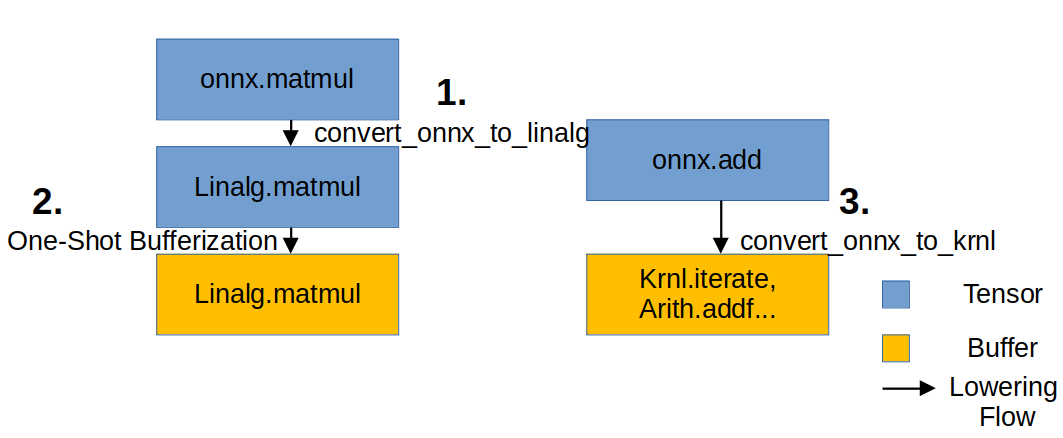 해당 figure대로 Lowering을 적용할 것입니다. 우선
 onnx를 linalg로 Lowering하고, One-shot Bufferization을 적용합니다. 이 때, linalg로 변환되지 않은 기존 onnx 연산은, Bufferization을 적용하지 않습니다. 왜냐하면 이 연산은 나중에 krnl으로 Lowering해야 하기 때문입니다. One-Shot Bufferization을 적용한 뒤, 남은 onnx 연산을 krnl으로 Bufferization합니다.
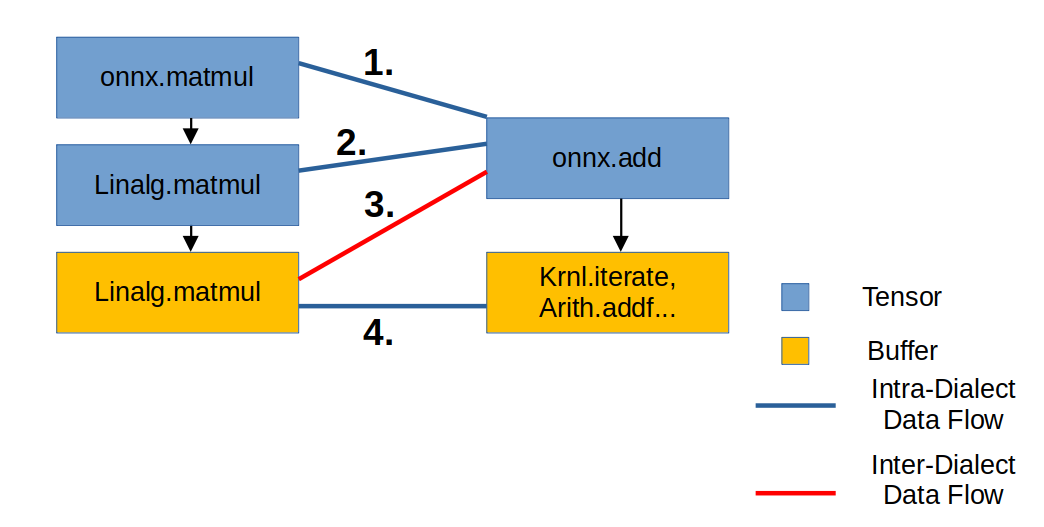 위의 Lowering 과정을 거칠 때마다, IR의 구조는 다음과 같습니다. 사각형은 IR, 사각형을 연결하는 선은 IR들의 연결 상태를 나타냅니다.
2. IR Lowering
[Input] 초기 상태: ONNX Tensor IR
func.func @test_full_pipeline(%arg0 : tensor<2x3xf32>, %arg1 : tensor<3x4xf32>, %arg2 : tensor<2x4xf32>) -> tensor<2x4xf32> {
  %0 = "onnx.MatMul"(%arg0, %arg1) : (tensor<2x3xf32>, tensor<3x4xf32>) -> tensor<2x4xf32>
  %1 = "onnx.Add"(%0, %arg2) : (tensor<2x4xf32>, tensor<2x4xf32>) -> tensor<2x4xf32>
  return %1 : tensor<2x4xf32>
}
여기서는 모든 것이 tensor입니다. MatMul과 Add는 수학적인 연산일 뿐, 어느 메모리에 저장될지는 정의되지 않았습니다.
[Step 1] Linalg로 Lowering (Tensor 유지)
명령어: --convert-onnx-to-linalg
func.func @test_full_pipeline(%arg0: tensor<2x3xf32>, %arg1: tensor<3x4xf32>, %arg2: tensor<2x4xf32>) -> tensor<2x4xf32> {
  %cst = arith.constant 0.000000e+00 : f32
  %0 = tensor.empty() : tensor<2x4xf32>
  %1 = linalg.fill ins(%cst : f32) outs(%0 : tensor<2x4xf32>) -> tensor<2x4xf32>
  %2 = linalg.matmul ins(%arg0, %arg1 : tensor<2x3xf32>, tensor<3x4xf32>) outs(%1 : tensor<2x4xf32>) -> tensor<2x4xf32>
  %3 = "onnx.Add"(%2, %arg2) : (tensor<2x4xf32>, tensor<2x4xf32>) -> tensor<2x4xf32>
  return %3 : tensor<2x4xf32>
}
tensor.empty()가 생성되었는데, 이는 나중에 버퍼화될 때memref.alloc()이 될 “자리 표시자” 역할을 합니다.- 아직은 모두
tensor타입입니다.
[Step 2] One-Shot Bufferization 수행
명령어: --one-shot-bufferize=allow-unknown-ops
func.func @test_full_pipeline(%arg0: tensor<2x3xf32>, %arg1: tensor<3x4xf32>, %arg2: tensor<2x4xf32>) -> tensor<2x4xf32> {
  %0 = bufferization.to_buffer %arg1 : tensor<3x4xf32> to memref<3x4xf32, strided<[?, ?], offset: ?>>
  %1 = bufferization.to_buffer %arg0 : tensor<2x3xf32> to memref<2x3xf32, strided<[?, ?], offset: ?>>
  %cst = arith.constant 0.000000e+00 : f32
  %alloc = memref.alloc() {alignment = 64 : i64} : memref<2x4xf32>
  linalg.fill ins(%cst : f32) outs(%alloc : memref<2x4xf32>)
  linalg.matmul ins(%1, %0 : memref<2x3xf32, strided<[?, ?], offset: ?>>, memref<3x4xf32, strided<[?, ?], offset: ?>>) outs(%alloc : memref<2x4xf32>)
  %2 = bufferization.to_tensor %alloc : memref<2x4xf32> to tensor<2x4xf32>
  %3 = "onnx.Add"(%2, %arg2) : (tensor<2x4xf32>, tensor<2x4xf32>) -> tensor<2x4xf32>
  return %3 : tensor<2x4xf32>
}
tensor.empty()가 사라지고 memref.alloc()이 등장했습니다. 이제 linalg.matmul의 결과는 이 할당된 주소에 직접 쓰여집니다. 그리고, bufferization.to_buffer으로, 입력받은 tensor 인자들을 memref로 취급할 수 있게 합니다.
linalg.matmul은 버퍼에 결과를 썼지만, 다음에 올 onnx.Add는 아직 텐서를 입력값으로 받습니다. 그래서 bufferization.to_tensor로, 버퍼를 다시 텐서처럼 래핑합니다.
[Step 3] Krnl Lowering
명령어: ... --convert-onnx-to-krnl
func.func @test_full_pipeline(%arg0: memref<2x3xf32>, %arg1: memref<3x4xf32>, %arg2: memref<2x4xf32>) -> memref<2x4xf32> {
  // ... 중략 ...
  linalg.matmul ins(%3, %2 : ...) outs(%alloc : memref<2x4xf32>)
  %4 = bufferization.to_tensor %alloc : memref<2x4xf32> to tensor<2x4xf32>
  %5 = builtin.unrealized_conversion_cast %4 : tensor<2x4xf32> to memref<2x4xf32>

  // onnx.Add가 구체적인 루프로 변환됨
  krnl.iterate(%6#0, %6#1) with (...) {
    %8 = krnl.load %5[%7#0, %7#1] : memref<2x4xf32> // MatMul의 결과 버퍼에서 로드
    %9 = krnl.load %arg2[%7#0, %7#1] : memref<2x4xf32>
    %10 = arith.addf %8, %9 : f32
    krnl.store %10, %alloc_3[...] : memref<2x4xf32>
  }
  return %alloc_3 : memref<2x4xf32>
}
함수의 시그니처가 tensor에서 memref로 완전히 바뀌었습니다. 더 이상 추상적인 텐서는 존재하지 않습니다.
onnx.Add는 하드웨어가 이해할 수 있는 루프(krnl.iterate)와 로드/스토어(krnl.load, krnl.store) 연산으로 쪼개졌습니다.
unrealized_conversion_cast는 일시적인 타입 불일치를 해결합니다. 이는 나중에 최적화 패스에 의해 제거됩니다.
시리즈 포스트
Language: English
https://mlir.llvm.org/docs/Bufferization/ ↩